


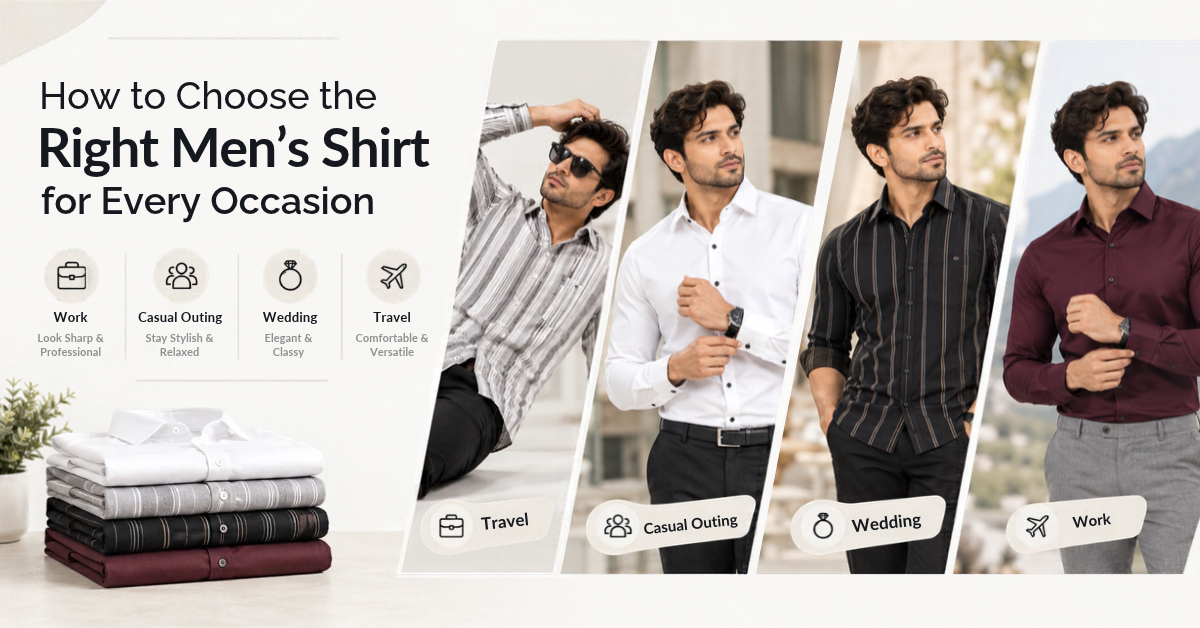
How to Choose the Right Men’s Shirt for Every Occasion
Most men own more shirts than they actually wear. The reason is rarely the shirt itself. It is usually a mismatch: a shiny satin shirt bought for one party that looks out of place everywhere else, or a stiff office shirt that feels wrong at a weekend lunch. Choosing the right shirt is less about following trends and more about reading the occasion and matching it with the right fabric, collar, fit and color.
This guide breaks that decision down step by step. We start with the basics every man should know about shirts, move into an occasion-by-occasion guide, and finish with a practical fit and quality checklist you can use the next time you shop, in a store or online.
Why the Right Shirt Matters More Than You Think
A shirt sits closest to your face and covers most of your upper body, so it is the first thing people notice. In a meeting, it signals preparation. At a wedding, it shows respect for the hosts. On a date, it says you made an effort without trying too hard. Get the shirt right and the rest of the outfit, from trousers to shoes, falls into place much more easily.
Comfort matters just as much. A shirt in the wrong fabric for the weather or the wrong fit for your body will have you tugging at the collar or sweating through the back within an hour. The right choice lets you forget about your clothes and focus on the moment.
Understand the Five Things That Make a Shirt
Before matching shirts to occasions, it helps to know what actually separates one shirt from another. Five elements decide how formal, comfortable and flattering a shirt will be.
1. Fabric
Fabric sets the tone. Cotton poplin is smooth and crisp, ideal for formal settings. Oxford cloth is slightly thicker with a visible basket texture, which makes it relaxed yet neat. Twill has a diagonal weave that resists wrinkles and drapes well. Linen breathes beautifully in heat but creases easily, so it reads casual. Flannel is soft and warm for cooler months, while satin cotton and silk blends carry a sheen suited to evening and festive wear.
A useful rule: the smoother and finer the fabric, the more formal the shirt. The more texture you can see and feel, the more casual it becomes.
2. Collar
The collar frames your face and is the clearest formality signal. A spread or semi-spread collar is the standard for business and works with or without a tie. A button-down collar is smart-casual and looks neat open-necked. A Cuban or camp collar lies flat and open, perfect for summer and parties. A mandarin or band collar has no folds at all and suits festive and minimalist looks.
3. Fit
Slim fit follows the body closely and suits lean frames. Tailored or regular fit gives a little more room through the chest and waist and works for most body types. Relaxed fit is roomy and best kept for casual, untucked wear. The right fit is the one that lies flat without pulling at the buttons or ballooning at the waist.
4. Color and Pattern
Solid whites and light blues are the most formal and versatile. Fine stripes and small checks add personality while staying office-friendly. Bold prints, florals and dark, saturated colors belong to evenings, parties and holidays. If you are unsure, go one step plainer than you think you need.
5. Sleeve and Hem
Full sleeves are expected in formal settings; short sleeves are strictly casual. Look at the hem too. A curved hem with longer tails is designed to be tucked in, while a straight, even hem is meant to be worn out.
The Occasion-by-Occasion Shirt Guide
With the basics clear, here is how to choose the right shirt for the situations most men dress for.
Office and Business Formal
Choose a full-sleeve shirt in cotton poplin or twill with a semi-spread collar. White and light blue are the safest choices and pair with almost every suit and trouser color. Pale pink, lavender and fine pinstripes add variety without breaking the dress code. Always tuck the shirt in, and pick a slim or tailored fit so there is no excess fabric bunching at the waist.
Business Casual and Client Meetings
Many workplaces now sit between formal and casual. Here, an Oxford or chambray shirt with a button-down collar is ideal. Small checks, soft stripes and muted tones such as grey, sky blue and light olive look polished with chinos. You can skip the tie, and if the hem is short and straight, a neat untucked look can work on casual Fridays.
Job Interviews
An interview is not the time to experiment. Wear a crisp white or light blue shirt in fine poplin or broadcloth, freshly ironed, with a collar that sits snugly under a tie. The goal is for the interviewer to remember what you said, not what you wore. Check the collar and cuffs closely; frayed edges or a yellowed collar undo an otherwise sharp look.
Weddings, Receptions and Festive Functions
Celebrations give you room to dress up. Satin cotton, linen-silk blends and subtle jacquard textures catch light without looking loud. For day functions, ivory, pastel peach, mint and powder blue feel fresh. For evening receptions, go richer with maroon, emerald, navy or black. A mandarin collar shirt layered with a Nehru jacket or bundi is a smart choice for Indian weddings, while a spread collar under a blazer suits Western-style receptions. Avoid pure white at some ceremonies and avoid outshining the groom.
Date Night and Dinner
Aim for effortless rather than formal. A well-fitted shirt in fine twill, a linen blend or a knit fabric in navy, olive, black or deep burgundy works well. Leave the top button open, roll the sleeves once to just below the elbow, and pair with dark jeans or tailored trousers. Fit is everything here; a shirt that sits close to your shoulders looks far better than an expensive one that hangs loose.
Parties and Evening Events
Evenings are where you can be bolder. Black or deep-toned satin shirts, printed viscose shirts and Cuban collar shirts with tasteful patterns all work. Keep the rest of the outfit simple when the shirt is the statement. Untuck only if the hem is straight and ends around the middle of your fly.
Weekends, Brunches and Travel
Comfort leads on weekends. Linen and chambray in warm weather, flannel and brushed cotton when it is cooler. Earthy tones such as beige, rust, olive and denim blue are easy to mix with jeans and chinos. For travel, choose cotton blends or twill that resist creasing so you still look put-together after hours in a car or flight.
Beach and Summer Outings
Go short-sleeved with a Cuban or camp collar in linen or seersucker. Light colors such as white, sand and sky blue reflect heat, and relaxed prints feel right in a holiday setting. A slightly boxy cut lets air move and keeps you cool.
Quick Reference: Shirt Choices by Occasion
Save this table for the next time you are standing in front of your wardrobe.
| Occasion | Best Fabric | Collar | Colors | Fit Tip |
|---|---|---|---|---|
| Office (formal) | Cotton poplin, twill | Semi-spread | White, light blue, pale pink | Slim or tailored; always tucked |
| Business casual | Oxford, chambray | Button-down | Blue, grey, subtle checks | Tailored; tucked or neat untuck |
| Job interview | Fine poplin, broadcloth | Spread or semi-spread | Crisp white or light blue | Well-pressed, no loose fabric |
| Wedding / festive | Satin cotton, linen-silk, jacquard | Mandarin, spread | Ivory, pastels, jewel tones | Sharp fit; layer with jacket or bundi |
| Date night | Fine twill, knit, linen blend | Cuban, spread, band | Navy, olive, black, maroon | Fitted, sleeves rolled once |
| Evening party | Satin, printed viscose | Cuban, spread | Black, deep tones, bold prints | Fitted; untuck if hem is straight |
| Weekend / travel | Linen, chambray, flannel | Button-down, camp | Earthy tones, checks | Relaxed but not baggy |
| Beach / summer | Linen, seersucker | Cuban / camp | Whites, sky blue, light prints | Boxy relaxed fit, short sleeves |
How to Check the Fit Before You Buy
Even the right fabric and color will look wrong if the fit is off. Run through these checks in the trial room, or compare these points against the size chart when you shop online.
- Shoulders: The shoulder seam should sit exactly at the edge of your shoulder bone, not drooping down the arm or riding up toward the neck.
- Collar: Button it fully. You should be able to slide two fingers between the collar and your neck, no more and no less.
- Chest: The front should lie flat with no pulling or X-shaped creases around the buttons when you stand or sit.
- Sleeves: Cuffs should end at the base of your thumb with your arms relaxed, and stay put when you reach forward.
- Body: You should be able to pinch roughly 2 to 3 inches of spare fabric at the waist. More than that means the shirt will billow when tucked.
- Length: A tuck-in shirt should stay tucked when you raise your arms. An untucked shirt should end around mid-zip.
A Smart Buying Checklist for Quality Shirts
Price does not always reflect quality. These details tell you whether a shirt will keep its shape and look good after many washes.
- Fabric label: Check the composition. 100% cotton or high-cotton blends breathe best; a small percentage of elastane adds stretch and comfort.
- Stitching: Look for small, tight stitches along the side seams. Finer stitching, roughly 14 or more stitches per inch, usually indicates better construction.
- Pattern matching: On striped and checked shirts, the pattern should line up at the pocket, placket and sleeve joins.
- Collar and cuffs: They should feel firm but not cardboard-stiff, and spring back after you bend them.
- Buttons: Should be stitched firmly with no loose threads. Spare buttons inside the shirt are a good sign of care in manufacturing.
- Care instructions: Check whether the shirt is machine-washable or needs dry cleaning, and choose based on how you actually live.
- Size chart and returns: When buying online, measure a shirt that already fits you well and compare it to the brand's chart. Make sure there is an easy exchange policy.
Build a Shirt Wardrobe That Covers Every Occasion
You do not need dozens of shirts. A focused set of seven covers almost every situation:
- A crisp white formal shirt for interviews, meetings and formal events.
- A light blue formal shirt as your everyday office staple.
- A blue or white Oxford button-down for business casual and smart weekends.
- A fine striped or checked shirt for variety at work.
- A dark solid shirt in navy, black or olive for dates and dinners.
- A linen shirt for summer, travel and holidays.
- One festive or statement shirt for weddings, parties and celebrations.
Start with the first three if you are building from scratch, then add the rest based on the occasions that come up most often in your life.
Caring for Your Shirts So They Last
Wash shirts inside out in cold or lukewarm water to protect color, and unbutton them fully, including the collar buttons, before washing. Avoid high dryer heat, which shrinks cotton and weakens fibers; hang them to dry on a proper hanger instead. Iron while slightly damp for the easiest crease removal, and store formal shirts on wide hangers so the shoulders keep their shape. Treat sweat and collar marks early, before they set.
Final Thoughts
Choosing the right men's shirt comes down to a simple sequence: read the occasion, pick the fabric and collar that match its formality, choose a color that suits the setting, and never compromise on fit. Once you understand these basics, shopping becomes faster, your wardrobe works harder, and you walk into every room looking like you belong there. Use the checklist above on your next purchase and build your shirt collection one well-chosen piece at a time.
Frequently Asked Questions
What is the most versatile shirt a man can own?
A well-fitted white or light blue cotton shirt with a semi-spread collar. It works for the office, interviews, formal events and even smart-casual outings with chinos or jeans.
Should a formal shirt be slim fit or regular fit?
It depends on your build. Slim fit suits lean frames, while tailored or regular fit gives broader or fuller builds a cleaner line. The shirt should lie flat without pulling at the buttons.
Can I wear a printed shirt to the office?
Only very subtle patterns such as fine stripes, micro-checks or tiny dots. Bold prints and florals are best kept for weekends, parties and holidays.
What color shirt should I wear to a wedding?
For daytime functions, choose pastels like ivory, peach or mint. For evening receptions, go for richer shades such as maroon, navy, emerald or black. Avoid colors that might clash with the hosts' theme.
How do I know if a shirt should be tucked in?
Look at the hem. A curved hem with longer tails is meant to be tucked in. A straight, even hem that ends around mid-zip can be worn untucked.
Which shirt fabric is best for hot weather?
Linen, seersucker and lightweight cotton poplin are the most breathable. Lighter colors also help by reflecting heat.